Services & Programs
The Center provides high-standard therapeutic, educational, psychological, and social services by applying modern and continuously updated programs. The team actively participates in scientific training to improve service quality.
- Family counseling to help families cope with daily challenges, strengthen family cohesion, and support people with disabilities psychologically and socially in a supportive family environment.
- Family empowerment by involving family members as partners in therapy to increase the effectiveness of interventions.
- Community empowerment through awareness-raising programs to increase societal understanding of disability and mental health and promote inclusion.
- Training placements for university and vocational students under the supervision of the multidisciplinary team, providing official certificates of completion.
- School student training programs raise awareness and teach students how to communicate and interact with people with special needs.
- Volunteer opportunities for individuals interested in participating in social and service activities.
- Diagnostic assessments using standardized tests to diagnose learning difficulties, academic delays, developmental delays, autism spectrum disorder (ASD), attention deficit/hyperactivity disorder (ADHD), and other conditions. Experienced specialists with accredited certifications carry out assessments.
- Advanced educational and therapeutic programs, including early intervention, intellectual disabilities, physical disabilities, ASD, learning difficulties, and the use of assistive technologies.
- Individualized treatment planning based on measurable goals and regular monitoring.
- Dedicated therapeutic clinics and rehabilitation services are supervised by a multidisciplinary team.
- Remedial education and behavior modification programs based on Applied Behavior Analysis (ABA) were appropriate.
- Implementation of Montessori principles to support holistic development in early childhood stages.
- Integration of technology in education through computers, interactive smart boards, and educational applications.
- Special education teachers play a key role in serving individuals with special needs, including assessing abilities, identifying individual requirements, designing and implementing individualized educational plans, developing life and social skills, providing psychosocial support, and facilitating inclusion in educational and community settings. Teachers work with families and stakeholders to ensure comprehensive development.
- Methodologies include initial and periodic assessments with validated tools, flexible curriculum design based on measurable objectives, continuous documentation and review of progress, individual and group sessions, coordination with multidisciplinary teams, parental involvement, and the use of multi-sensory and practical learning strategies.
- The curriculum integrates pre-reading and pre-writing developmental preparation, functional literacy, and numeracy taught according to each student’s level and learning plan, with the ultimate goal of increasing independence.
- Social health and community work
- Psychotherapy
- Occupational therapy
- Speech and language therapy
- Psychomotor therapy
- Remedial education
- Physiotherapy
- Family counseling and guidance
- Rehabilitation and community education: Promote community acceptance and support for people with disabilities.
- Awareness & Media: Utilize media channels to educate and reach diverse segments of society, fostering inclusion.
- Capacity Building and Institutional Development: Train staff, NGOs, and schools in best practices for working with individuals with disabilities.
- Employment support & economic development: Help people with disabilities access suitable employment and develop productive capacities.
- Cultural, social & sports participation: Encourage active participation of people with disabilities in cultural, social, and sporting events.



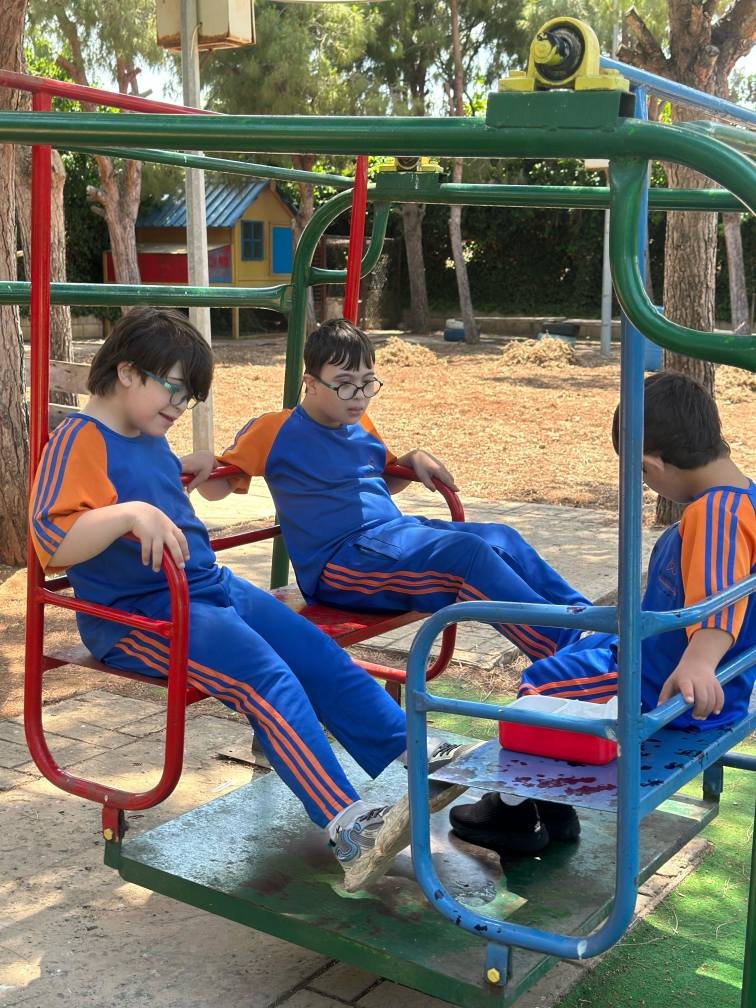
Types of Disabilities
Down Syndrome
Mild Intellectual Disability
Moderate Intellectual Disability
Severe Intellectual Disability
Cerebral Palsy
Autism Spectrum Disorder (ASD)
أنواع الإعاقات
متلازمة داون
إعاقة عقلية بسيطة
إعاقة عقلية متوسطة
إعاقة عقلية شديدة
الشلل الدماغي
إضطراب طيف التوحّد
Stages Level
Kindergarten level
Basic academic and light vocational training
Intensive academic and vocational training
Care program for severe disabilities
مستوى المراحل
مرحلة الروضات
أكاديمي وتأهيل مهني مبسط
أكاديمي وتأهيل مهني مكثف
رعائي إعاقات شديدة